Introduction
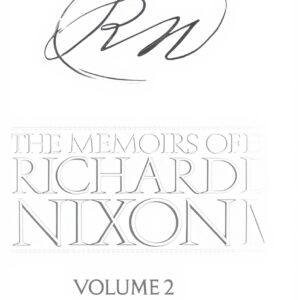
I picked up the 1979 paperback edition of Richard Nixon’s memoirs during what felt like a particularly transitional summer, one where the waste management open | india u-19 vs pakistan u-19 keyword kept appearing in my research feeds alongside political analysis. The book arrived with that distinctive old-paper smell—part musty, part sweet—that only books of a certain age carry, the pages slightly yellowed at the edges but still firm to the touch. What I didn’t anticipate was how Nixon’s firsthand account would become a lens through which I’d view not just historical events but the very nature of political decision-making during times of public scrutiny.
Real-life Context
My reading happened mostly in the late evenings, after days spent following contemporary political developments that somehow always circled back to questions of legacy and accountability. The paperback format made it easy to carry between my desk and the worn armchair where I do my best thinking, its compact size fitting comfortably in one hand while I took notes with the other. There was something about the physicality of this particular edition—the slightly faded cover image of Nixon, the way the spine creased in specific sections where previous readers had likely paused—that made the historical distance feel smaller. I found myself reading passages about presidential decisions while simultaneously tracking modern political commentary, the two timelines overlapping in unexpected ways. The room’s lighting cast long shadows across the pages as I turned them, each rustle marking another step deeper into Nixon’s perspective.
What surprised me most was how the memoir’s accessibility in English allowed me to focus on the nuance rather than struggling with translation. The straightforward language Nixon employed meant I could concentrate on what lay between the lines—the pauses in his narrative, the moments where his account seemed to speed past certain events while lingering on others. I’d often set the book down after particularly dense sections and just stare out the window, listening to the distant traffic sounds while processing how leadership narratives get constructed. The weight of the paperback in my lap became a constant reminder that I was holding someone’s attempt to shape how history would remember them.
Detailed Observation
Nixon’s account operates on multiple levels simultaneously. On the surface, it’s a chronological recounting of events from his political career, but beneath that runs a consistent thread of justification and contextualization. The writing style is remarkably direct for a political memoir—he doesn’t embellish with florid prose but instead builds his case through accumulated detail. I noticed how certain chapters devoted disproportionate space to what might seem like minor administrative decisions, while major historical turning points sometimes received surprisingly concise treatment. This structural choice itself tells a story about what Nixon considered worth emphasizing.
The physical book has its own characteristics that shaped my reading experience:
- The paperback binding shows wear at specific sections, particularly around the Watergate chapters
- Page corners are slightly softened from repeated handling, suggesting previous readers lingered on certain passages
- Typeface is clear but dated, giving the text a distinct late-70s aesthetic
- Margins are narrow, leaving little room for annotations but creating a dense reading experience
- Chapter breaks feel abrupt at times, as if Nixon preferred to let events speak for themselves rather than providing smooth transitions
What caught me off guard was how Nixon’s descriptions of political strategy sessions echoed contemporary discussions about governance I’d been following. His account of building international relationships contained observations about personal diplomacy that felt remarkably current, despite the decades separating his experiences from today’s political landscape. The memoir serves as both historical record and political primer, offering insights into how leaders navigate complex systems while maintaining their personal convictions.
To be honest, the learning curve here isn’t about understanding Nixon’s prose—which is straightforward—but about adjusting to his narrative pacing. He assumes familiarity with certain historical contexts that modern readers might need to research separately. Moving past the surface narrative requires willingness to sit with uncomfortable moments where Nixon’s perspective clashes with established historical accounts. The memoir demands active reading rather than passive consumption, asking you to constantly weigh his version against what you already know.
Reflection
Reading Nixon’s memoir during a summer of political transitions created unexpected resonances. I didn’t realize at the time how much the book’s physical presence would influence my engagement—the way the paper felt between my fingers, the sound of pages turning, the visual rhythm of dense text blocks alternating with occasional photographs. These sensory elements made the historical distance feel bridgeable, as if I were examining artifacts from a recent past rather than distant history. The memoir became less about Nixon specifically and more about the universal challenges of leadership under pressure.
There were evenings when I’d read a passage about Nixon’s foreign policy decisions and then look up to see moonlight filtering through the window, casting the room in silver tones that made everything feel suspended between past and present. In those moments, the memoir transcended being merely a historical document and became something more personal—a meditation on how individuals navigate impossible choices. The book’s unadorned language somehow made the emotional weight of certain decisions more palpable than dramatic prose ever could.
What stayed with me longest was Nixon’s account of small, almost mundane presidential moments—briefing preparations, handwritten notes to staff, quiet reflections after major speeches. These details, more than the historical milestones, offered the clearest window into how leadership functions day-to-day. The memoir’s value lies not in dramatic revelations but in these accumulated ordinary moments that collectively shape extraordinary events. Holding the paperback, feeling its slight weight in my hands, I understood that I wasn’t just reading about history—I was handling someone’s attempt to make sense of their place within it.
Conclusion
The experience of reading Nixon’s memoirs in this specific edition, during this particular political moment, revealed how historical accounts continue speaking to contemporary challenges. The paperback’s physical limitations—its narrow margins, dated typesetting, and wrn binding—somehow enhanced rather than diminished the reading experience, serving as constant reminders of the temporal distance between Nixon’s writing and my reading. The memoir doesn’t provide easy answers about leadership or political decision-making, but it offers something perhaps more valuable: a nuanced perspective on how complex events look from the inside.
What remains after closing the book is not a clear judgment of Nixon’s presidency but a deeper appreciation for the complicated relationship between personal narrative and historical record. The memoir stands as one man’s attempt to contextualize his choices within the pressures and possibilities of his time. Its enduring value lies in this honest engagement with complexity, offering readers not definitive conclusions but thoughtful entry points into ongoing conversations about power, accountability, and legacy. The physical book now sits on my shelf, slightly more worn than when it arrived, its pages holding not just Nixon’s words but the quiet hours I spent considering them.