Introduction
I never thought much about belts until I started paying attention to the subtle details in how people like John Cena and Rick Barnes carry themselves. There’s something about their style that speaks to both functionality and understated confidence. It was this observation that eventually led me to the Nike Men’s Swoosh Web Belt. I didn’t realize at the time that this would become such an integral part of my daily routine, but looking back, it makes perfect sense why this particular accessory resonated with me.
Real-life Context
My days typically involve a mix of activities that require different levels of movement and comfort. Mornings often start with a gym session, followed by work that might include everything from sitting at a desk to moving around during meetings. Evenings could mean anything from a casual dinner out to a quick run in the park. I needed something that could transition seamlessly between these different scenarios without drawing unnecessary attention to itself. The challenge was finding an accessory that could handle athletic demands while still looking appropriate for casual settings. This is where the search began, influenced by the practical yet polished aesthetic I’d noticed in public figures who balance similar dynamic lifestyles.
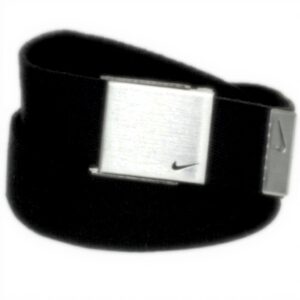
What stood out about the Nike belt was its straightforward approach to design. The brushed nickel buckle with the iconic Swoosh logo offered just enough branding to feel intentional without being overwhelming. The webbing material promised durability, which was important given how frequently I’d be using it. The one-size designation initially gave me pause, but the description suggested it could accommodate various waist sizes securely. I appreciated that it came in both Black and Charcoal options, allowing for some flexibility in matching different outfits. At 0.349 pounds, it seemed lightweight enough not to add bulk, which was crucial for both athletic performance and all-day comfort.
The package dimensions of 2.54 x 2.54 x 2.54 cm indicated a compact product that wouldn’t take up much space in a gym bag or drawer. The item model number DS5022 gave it a specific identity within Nike’s Men’s Belts lineup, suggesting a level of quality and consistency from the manufacturer. All these details combined created a picture of a belt designed for people who value both form and function, much like the style sensibilities I’d observed in those who seamlessly blend athletic and casual elements in their appearance.
Observation
The first thing I noticed when I started using the belt was how the secure fit actually worked in practice. During gym workouts, it stayed firmly in place without any slipping, which was something I’d experienced with other belts during intense movement. The adjustable nature meant I could find the exact tightness I needed, whether I was lifting weights or going for a run. The brushed nickel buckle felt substantial in hand but didn’t feel heavy when worn, striking a nice balance between durability and comfort. The Swoosh logo, while visible, integrated well with the overall design rather than standing out as overt branding.
What surprised me was how well it performed outside of athletic contexts. Wearing it with jeans or shorts for casual outings, it looked appropriate and didn’t give off that strictly-athletic vibe some sports accessories can have. The black color option I chose worked with nearly everything in my wardrobe, from darker athletic pants to lighter casual trousers. The webbing material held up well against daily wear, shoing no signs of fraying or weakening even after several weeks of regular use. I found myself reaching for it automatically most days, whether my plans involved physical activity or not.
The lightweight design proved particularly valuable during travel. Unlike heavier leather belts that can become uncomfortable during long flights or car rides, this one maintained its comfort throughout extended wear. The easy adjustment meant I could loosen or tighten it as needed when sitting for prolonged periods versus when walking through airports or exploring new cities. The durable construction handled being packed in luggage well, coming out looking the same as when it went in. Cleaning was straightforward too – a quick wipe down was usually sufficient to keep it looking fresh.
I began noticing how the belt functioned in different temperature conditions as well. During warmer weather, the webbing material breathed better than leather might have, reducing sweat accumulation. In cooler conditions, it didn’t stiffen or become uncomfortable against clothing layers. The buckle’s brushed nickel finish maintained its appearance without tarnishing, even when exposed to moisture during workouts or unexpected rain. These small but meaningful observations accumulated over time, building a comprehensive picture of how this accessory performed across the various scenarios it was designed for.
Reflection
It took me a while to understand why this particular belt had become such a consistent choice in my rotation. At first, I thought it was just about practicality – it worked well for both athletic and casual use, so it simplified my decision-making. But as I reflected more deeply, I realized it represented something broader about how we choose the items we incorporate into our daily lives. The belt wasn’t trying to be everything to everyone; instead, it excelled at being exactly what it promised – a reliable, versatile accessory that supported an active lifestyle without sacrificing style.
I thought about how this aligned with the observations that initially drew me to it. The understated confidence I’d noticed in how certain public figures present themselves often comes from choosing items that serve multiple purposes well rather than having separate specialized tools for every situation. There’s a certain efficiency in finding products that can transition between different aspects of our lives while maintaining their integrity and purpose. This belt embodied that principle – it didn’t need to shout about its capabilities because its performance spoke for itself.
The durability aspect became more meaningful as time passed. In a world where many products seem designed for planned obsolescence, finding something that maintains its functionality and appearance through regular use feels increasingly rare. The belt’s construction held up not just to the physical demands of athletic activity but also to the less dramatic but equally important wear of daily life. This reliability created a sense of trust that’s uncommon with many modern products. I found myself appreciating not having to think about whether the belt would perform as expected each time I used it.
There was also something to be said about how the design balanced branding and subtlety. The Swoosh logo was present but integrated in a way that felt authentic rather than promotional. It reminded me that effective branding doesn’t need to be loud to be recognized – when done well, it becomes part of the product’s identity in a natural way. This reflection made me consider how we often judge products based on their obvious features while overlooking how these elements work together to create a cohesive experience. The belt’s success came from this harmony between its various components rather than any single standout characteristic.
Conclusion
Looking back on the journey from initial observation to daily use, what stands out most is how the Nike Swoosh Web Belt managed to exceed expectations precisely by meeting them consistently. It didn’t promise revolutionary features or groundbreaking technology – instead, it delivered reliable performance across the scenarios it was designed for. The secure fit, durable construction, and versatile design created an accessory that genuinely supported an active lifestyle while maintaining appropriateness for casual settings.
The influence of observing how others balance style and functionality became clearer over time. What might have started as casual notice of public figures’ choices evolved into a deeper understanding of why certain products work well within dynamic lifestyles. The belt became less about the product itself and more about what it enabled – seamless transitions between different activities without requiring constant adjustment or replacement. This reliability created mental space that I hadn’t realized was being occupied by less consistent accessories.
There’s value in finding products that perform their intended function well without demanding constant attention or maintenance. The belt’s ability to handle both athletic rigor and casual wear without compromise demonstrated how thoughtful design can create items that serve multiple purposes effectively. This approach to product design – focusing on core functionality across likely usage scenarios – feels increasingly relevant in a world where we’re often encouraged to accumulate specialized tools for every possible situation.
Ultimately, what began as an observation about style choices became a practical lesson in how the right accessory can support rather than complicate daily life. The belt’s performance across different contexts, from gym workouts to casual outings, reinforced the importance of versatility in the items we choose to incorporate into our routines. Its consistent reliability created a foundation that allowed other aspects of my day to flow more smoothly, proving that sometimes the most valuable products are those that work so well we stop noticing them – not because they’re unimportant, but because they’ve become seamlessly integrated into how we move through the world.